
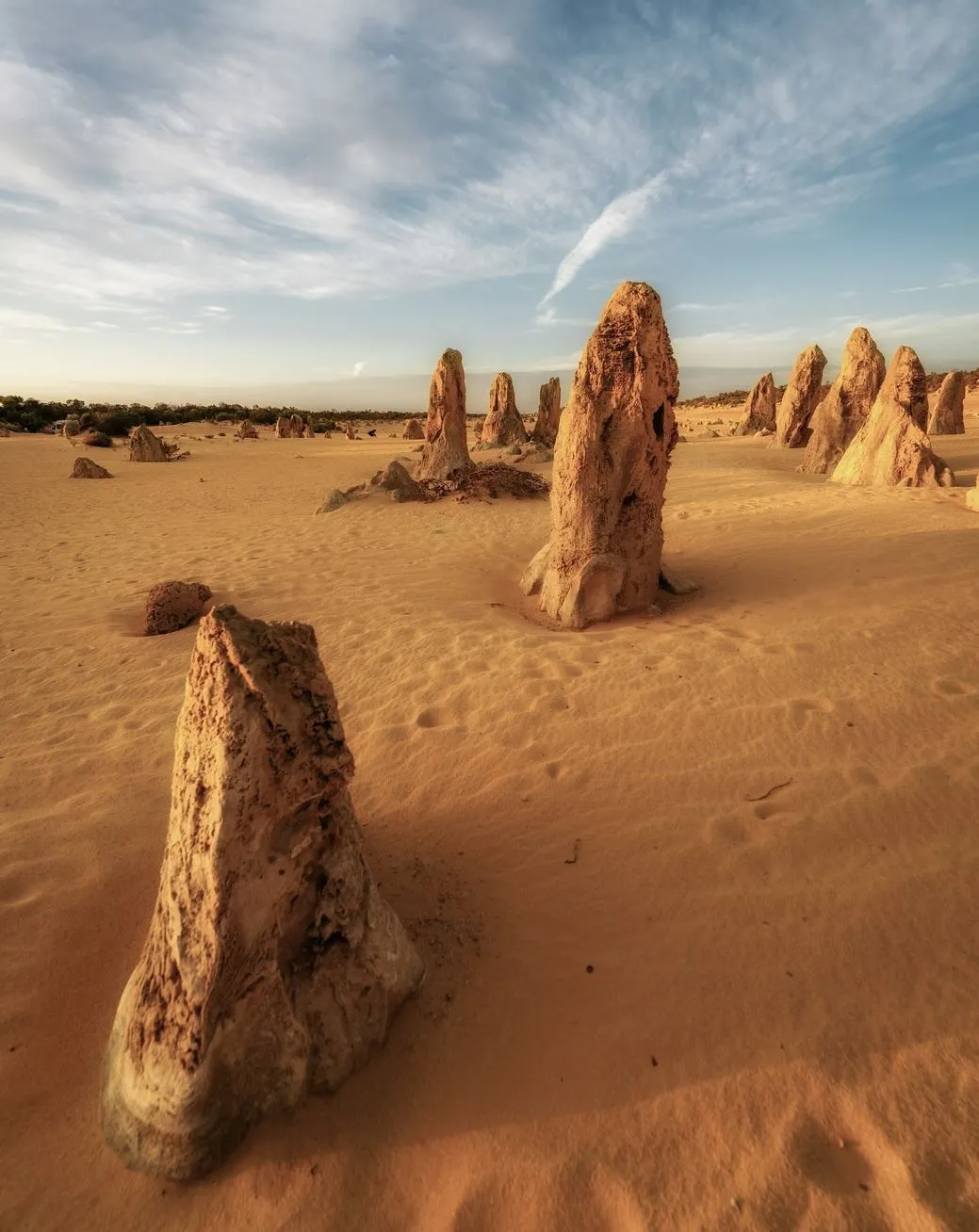
 When people ask me, “Is Pinnacles, WA, a volcano?” I laugh. Standing in the middle of Nambung National Park, those limestone towers do look like the aftermath of a volcanic eruption. You could swear lava had cooled and cracked, leaving behind a stone forest in the sand. But while the Pinnacles Desert feels like a dormant volcano rising from the dunes, the story behind it is much stranger than magma.
I’m Paul Beames, and after years of leading groups across Western Australia’s wild landscapes, I’ve heard every tall story under the sun about the Pinnacles. Some say it was formed by tectonic plates splitting, others reckon there’s a crater rim buried out there. Truth is, this isn’t volcano content — it’s seashells, sand and time. Still, there are enough myths, creation stories and comparisons to active volcanoes that it’s worth breaking down why this desert keeps sparking volcanic chatter.
What Are The Pinnacles?
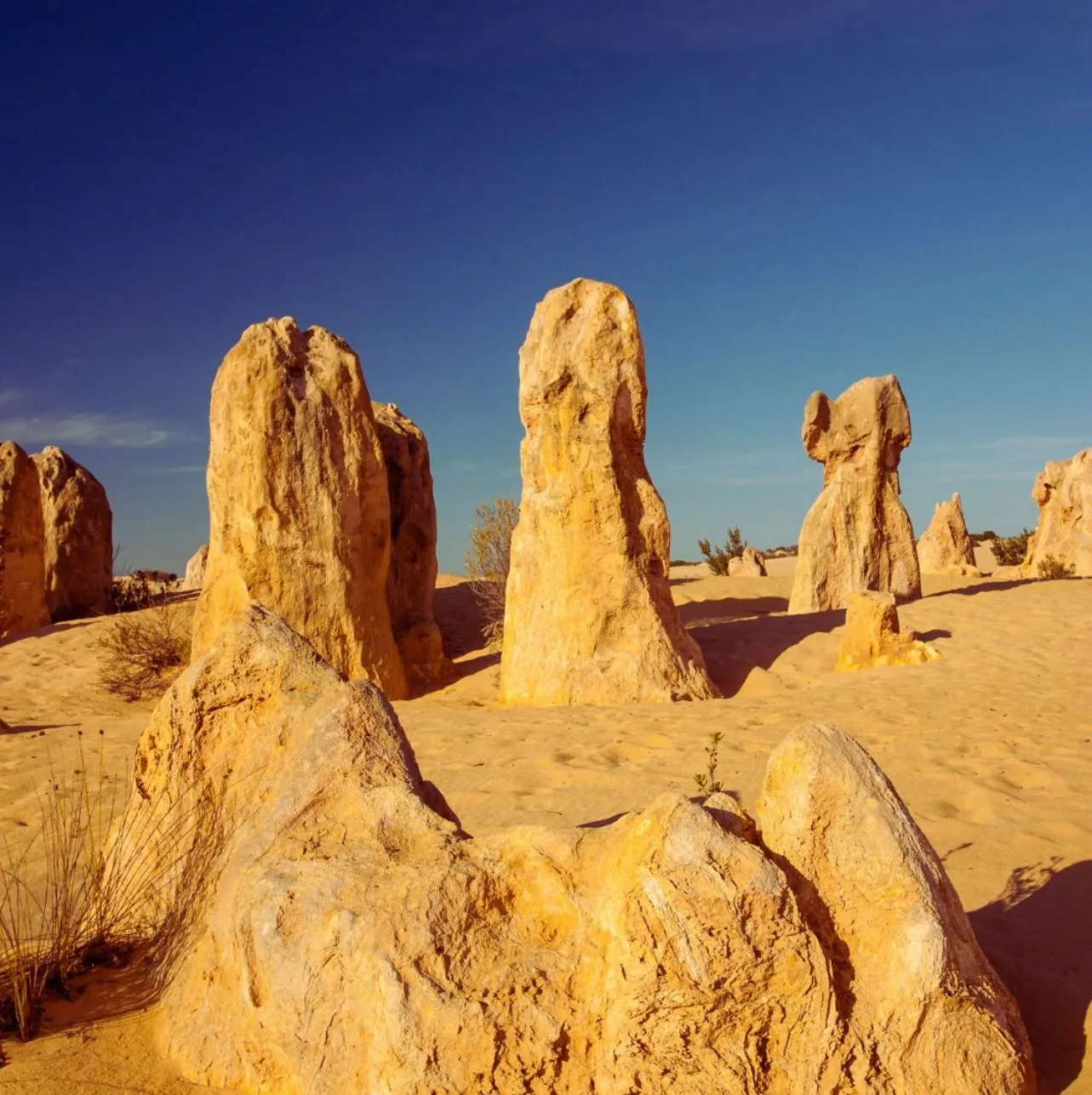
If you’ve seen photos of the Pinnacles, you’ll know they look like something out of a sci-fi movie — jagged stone fingers rising from golden sand in Nambung National Park. No lava, no crater, no steaming vents. Just limestone columns, some a few metres high, scattered across the desert like ancient markers.
These pillars formed thousands of years ago when seashells from an old coastal dune system broke down into lime-rich sands. Over time, rainwater cemented these grains together. Then, as the wind stripped away the softer sand, the harder chunks were left standing — today’s Pinnacles.
So, not a volcano. Not even close. More like nature’s slow-motion sculpting with lime, wind and sand.
Statistics And Visitor Numbers
| Stat | Number |
|---|---|
| Annual visitors to Pinnacles | ~250,000 |
| Distance from Perth | 200 km |
| Average summer temp | 35–40°C |
| Average winter temp | 15–20°C |
| Park entry fee | $15 per vehicle (as of 2025) |
Why Do People Think The Pinnacles Are A Volcano?
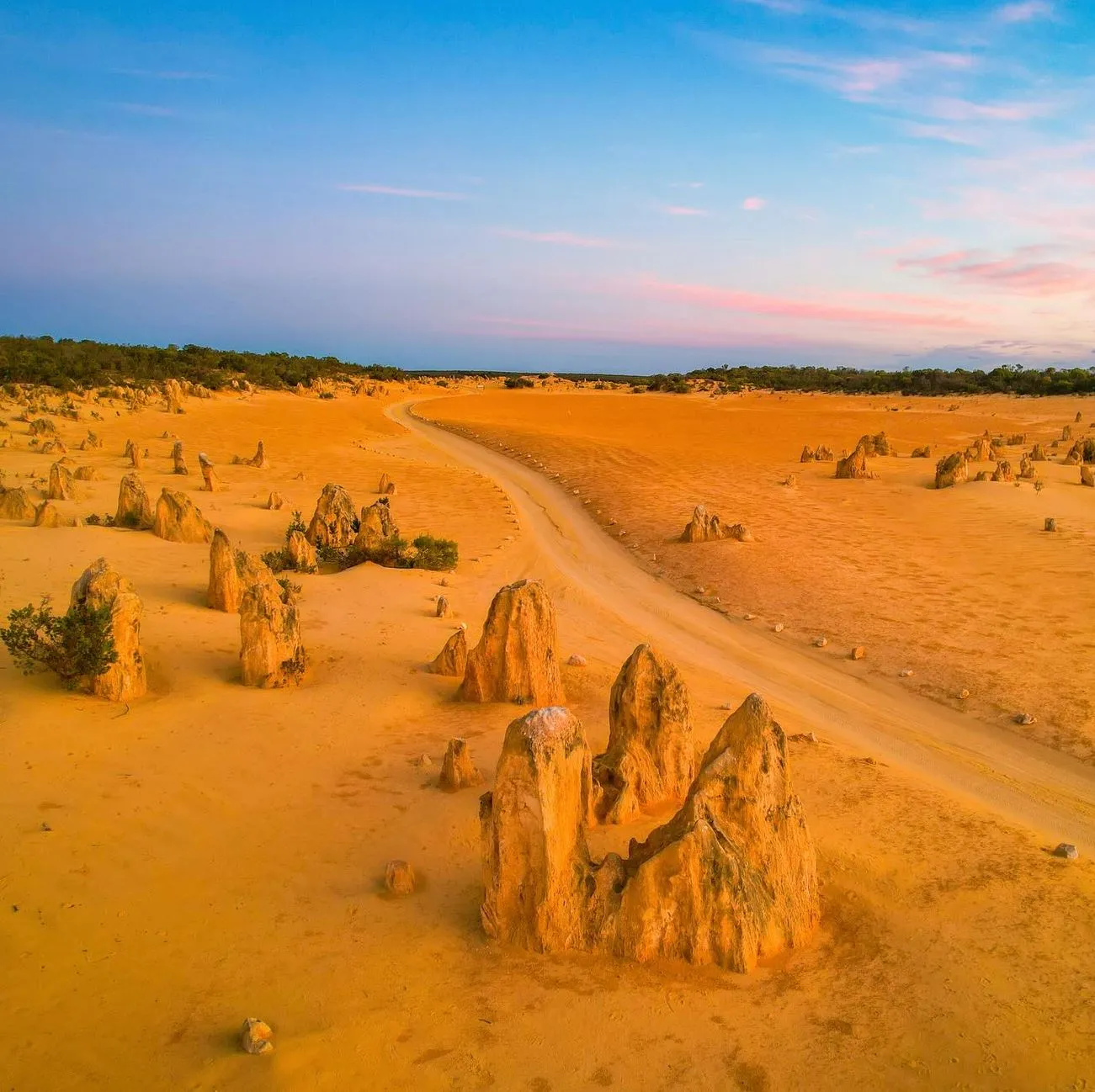
It’s easy to see why newbies think the Pinnacles are volcanic. Jagged rocks pop out of the sand like frozen lava tubes. The desert floor, especially under the midday sun, looks like scorched basaltic lava. At sunset, the shadows stretch long and sharp, and the whole place looks like an eruption paused in time.
Tourists often compare the landscape to the Cascade Range in North America. That chain of hotspot volcanoes includes Mount Baker, where the Cascades Volcano Observatory monitors seismic activity, fumarole activity and volcanic hazards like ash clouds. When you’ve seen those, stepping into the Pinnacles Desert feels familiar.
- Visual drama: The pillars look like lava domes or the remains of an andesite lava flow.
- Isolation: The Pinnacles appear suddenly, like a crater in the desert.
- Stories: Many stories and creation stories from locals and visitors alike fuel the “volcano” vibe.
- Confusion with WA’s geology: Western Australia does have ancient volcanic rocks, including basaltic lavas in the Pilbara.
But while seismic stations across WA monitor tectonic plates and quakes, no one’s waiting for an eruption alert in Nambung.
How The Pinnacles Formed: Geology Made Simple
Forget lava domes and crater walls. The Pinnacles’ story is one of seashells, sand and slow erosion. Millions of years ago, this stretch of WA coastline was underwater. Shell fragments washed up, broke down and built lime-rich dunes. Over time, rain leached minerals into the sand and cemented it into limestone.
Then nature got to work. Plant roots cracked the limestone, wind whipped sand awa,y and the harder material stood tall while the softer parts eroded. The result: thousands of standing limestone pillars. No magma chambers, no caldera volcano collapse – just patient weathering.
The Pinnacles Compared To Real Volcanic Landscapes
| Feature | The Pinnacles | Typical Volcano |
|---|---|---|
| Rock type | Limestone (calcium carbonate) | Basalt, andesite, rhyolite (igneous) |
| Formation | Wind + water erosion of ancient dunes | Magma rising, cooling, erupting |
| Location | Nambung National Park, WA | Global “Ring of Fire” zones |
| Age | Thousands of years | Millions of years (varies) |
| Current activity | None | Active, dormant, or extinct |
Seasonal Travel Tips
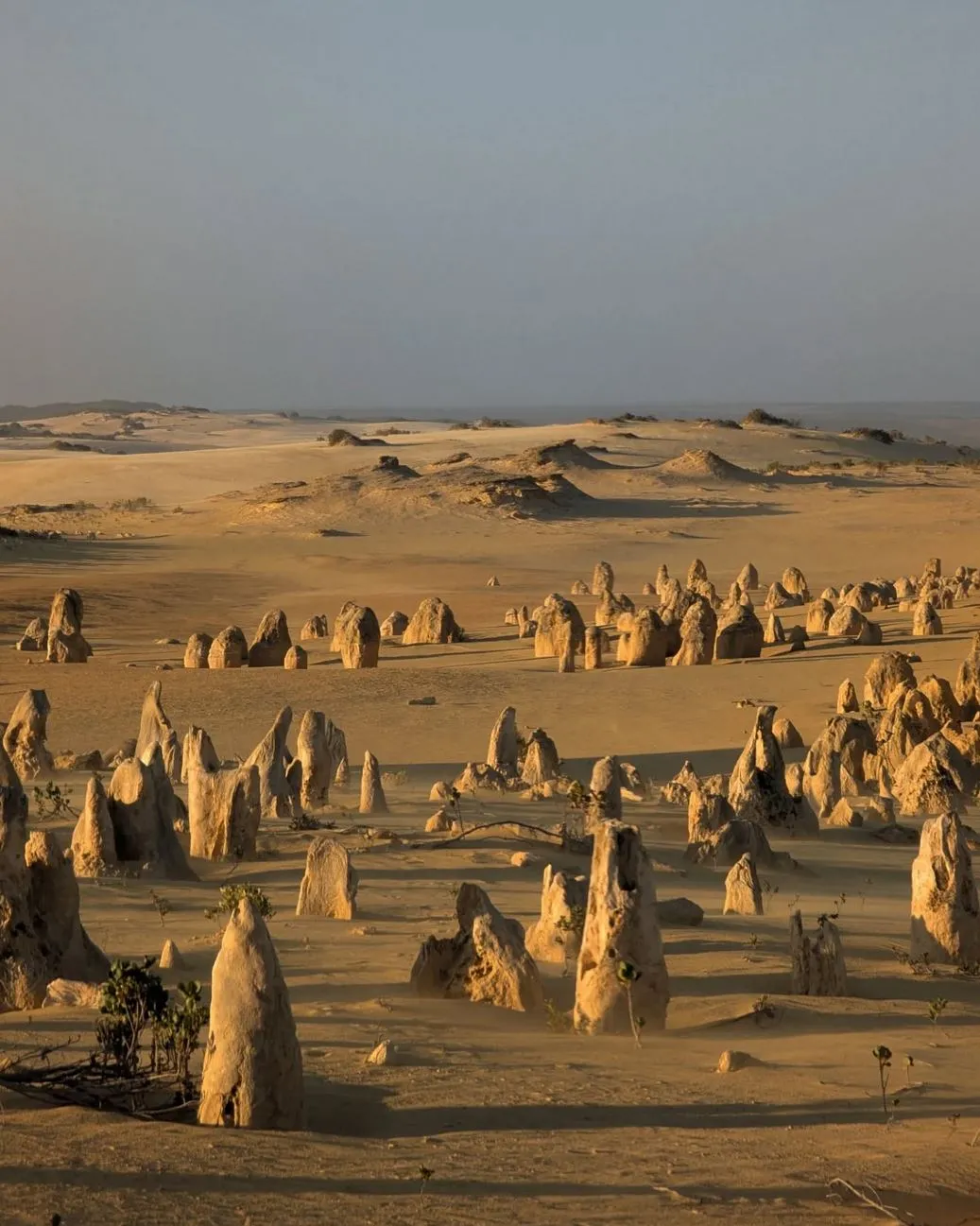
The Pinnacles Desert is open all year, but Western Australia’s climate can change the whole experience. Summer brings heat that makes crater walls shimmer. Winter delivers crisp air but occasional showers. Spring explodes with wildflowers, making even a shield volcano look tame by comparison.
What To Expect Each Season
- Summer (Dec–Feb): Daytime highs of 35°C+. Hot, glaring, mozzies about. Carry water, wear a hat and plan trail excursions early or late.
- Autumn (Mar–May): Cooler days, golden light. Perfect for photography.
- Winter (Jun–Aug): Mild temps, clear nights for Milky Way stargazing. Bring a jumper.
- Spring (Sep–Nov): Best overall. Wildflowers, comfortable temps, wildlife active.
For photographers, the Milky Way arcs beautifully over the Pinnacles Desert in winter. Long exposures capture limestone against star fields, making it look like fumarole activity rising into the night.
Local Insights: Travel Like A West Aussie
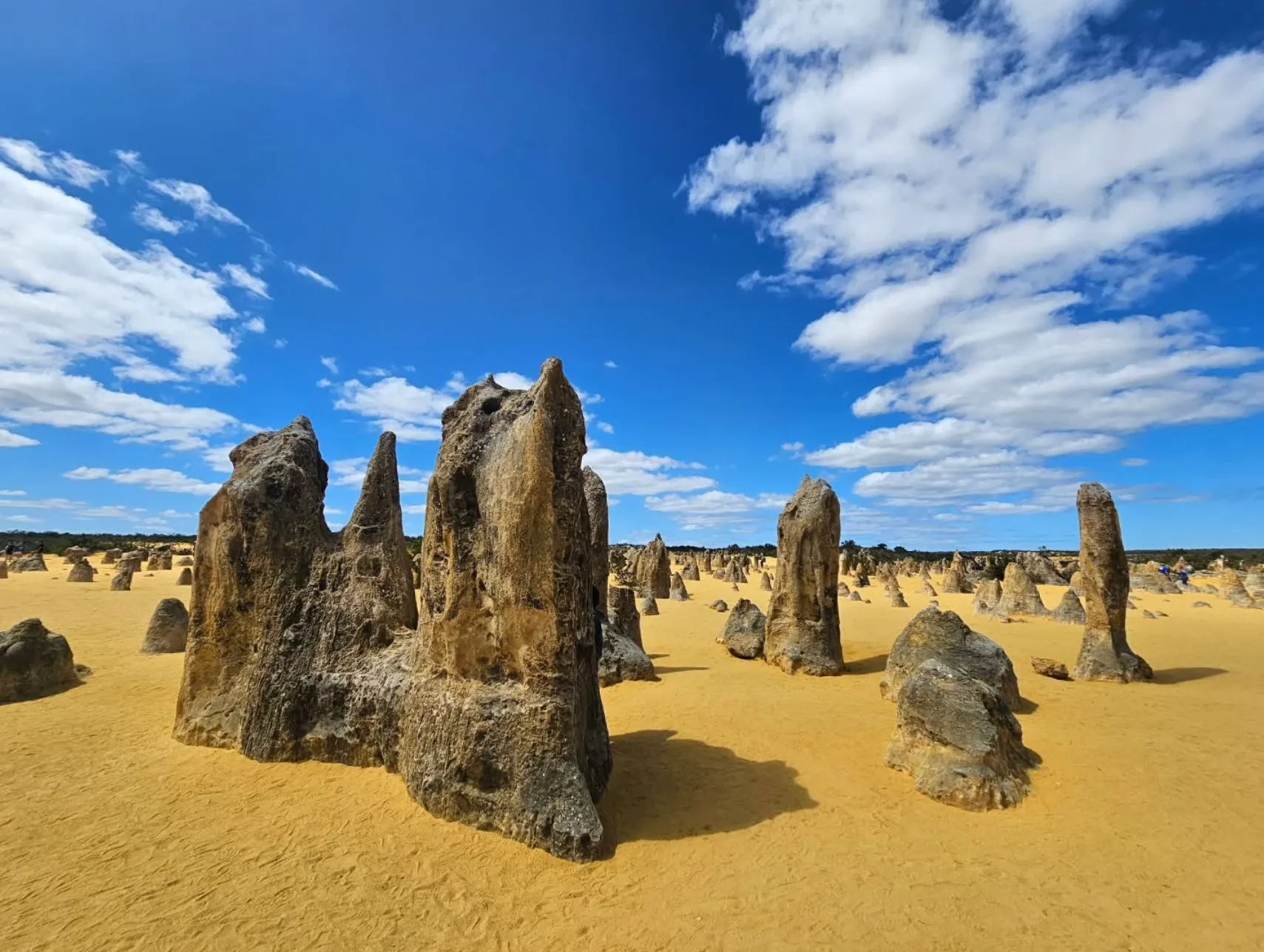
Visiting the Pinnacles isn’t just a geology lesson — it’s a cultural and community experience. For the Yued people, Traditional Owners of Nambung National Park, the Pinnacles are part of creation stories passed down over generations. Walking here respectfully means sticking to marked natural trails, reading interpretive signs and remembering this is shared Country.
Practical tips from the road:
- Fuel at Cervantes: No servos in the park. RAC Cervantes Holiday Park and Cervantes Lodge make good bases.
- Eat local: Lobster Shack is a WA icon — try fresh Western Rock Lobster straight from the ocean.
- Visitor centre: The Pinnacles Desert Discovery Centre has geology exhibits, creation stories and trail maps.
- Wildlife watch: Emus, kangaroos and even the odd goanna roam. Drive carefully, especially at dawn and dusk.
- Shoes and sand: Expect sand in everything — your shoes, socks, even the billy.
Nearby Yanchep National Park has caves, koalas and hiking trails. Linking the two parks makes for a great weekend of year-round activities. And if you don’t fancy self-driving, several operators run guided Pinnacles tours from Perth, often pairing the desert with stops at Lobster Shack or local wineries for a cracking full day out.
Common Misconceptions
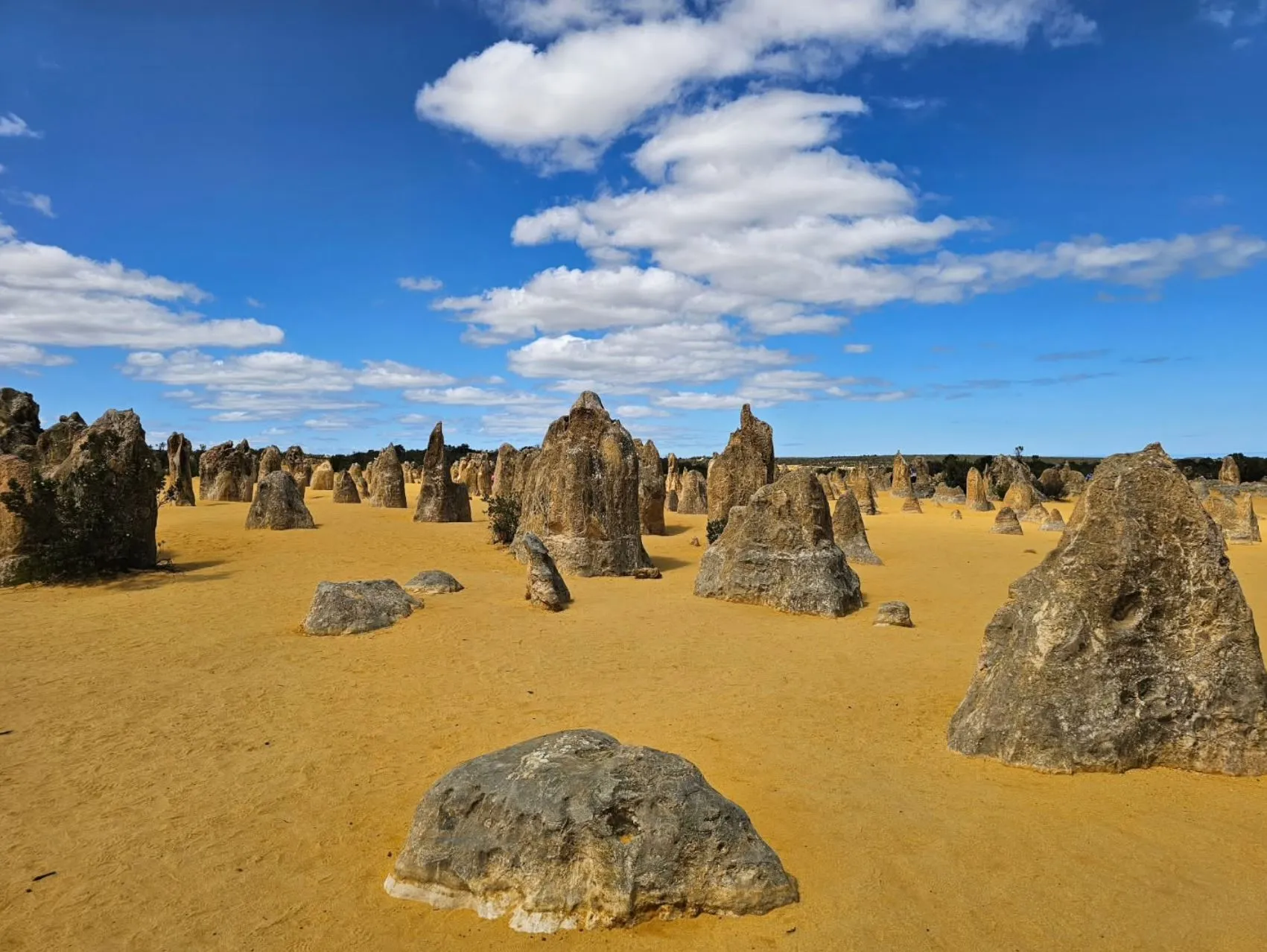
- “It’s a volcano.” Nope — limestone, not lava.
- “You need 4WD to visit.” Not true — sealed roads lead to the main carpark.
- “It’s only worth a quick stop.” Wrong — stay for sunset or sunrise and you’ll see why it’s special.
- “It’s the only desert with spires.” Australia has other limestone formations (like WA’s Wave Rock area), but the Pinnacles are unique in scale.
FAQ
Are the Pinnacles an active volcano?
No. They’re limestone formations created by wind and water erosion — not volcanic activity.
What’s the link between the Pinnacles and volcanoes?
Mainly visual resemblance. The spires look like cooled lava flows, crater walls, or lava domes, but they’re actually ancient limestone.
Are there active volcanoes in Western Australia?
No. WA’s volcanic rocks are ancient and inactive. Active volcanoes are found along the Cascade Range and in places like Indonesia, where seismic activity is ongoing.
How old are the Pinnacles?
The limestone dates back millions of years, while the exposed spires are thought to have formed 25,000–30,000 years ago.
Can you hike around the Pinnacles?
Yes. There are short natural trails, a driving loop, and walking paths through the Pinnacles Desert. Stick to marked tracks.